
Managing models in production is challenging. To optimize the value of machine learning, machine learning models must improve efficiency in business applications or support efforts to make better decisions as they run in production. MLOps best practices and technology enable businesses to deploy, manage, monitor, and govern ML.
Important data science practices are evolving to include more model management and operational functions, ensuring that models do not negatively impact business by producing erroneous results. Retraining models with updating data sets now includes automating that process, recognizing model drift, and alerting when it becomes significant each aspect is equally vital. In addition, model performance relies on maintaining the underlying technology, MLOps platforms, and improving performance by recognizing when models demand upgrades.
MLOps also known as industrialized machine learning is the practice of building machine learning pipelines, rather than just a model, to ensure that you can automate and optimize your machine learning workflows. It combines the disciplines of machine learning, software engineering, DevOps and data engineering to unify the development and deployment of ML models, allowing you to standardize and streamline the continuous delivery of high-performing models in production. MlOps is the center point of all stakeholders in the DataScience Project.
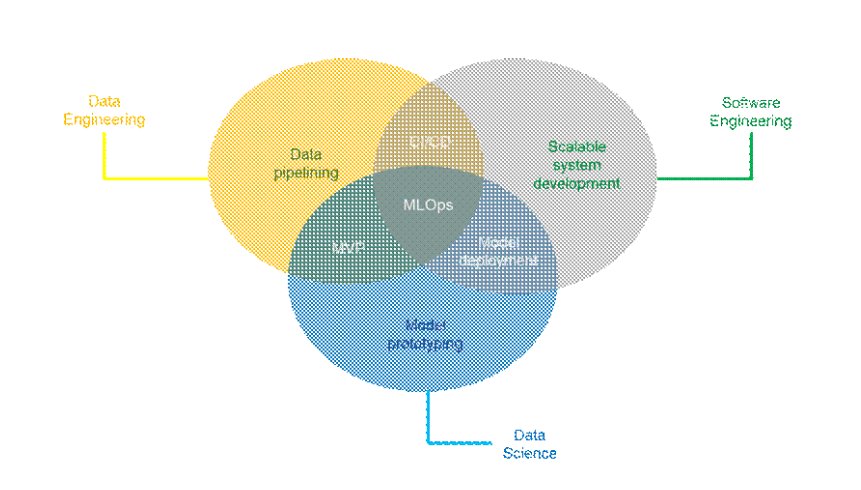
The goal is to reliably deliver ML-driven features (like recommendation engines, fraud detectors, voice assistants, etc.) to end-users at scale.Hence, as mentioned earlier, a key realization is that the ML model or algorithm itself is only a small part of a production ML system.
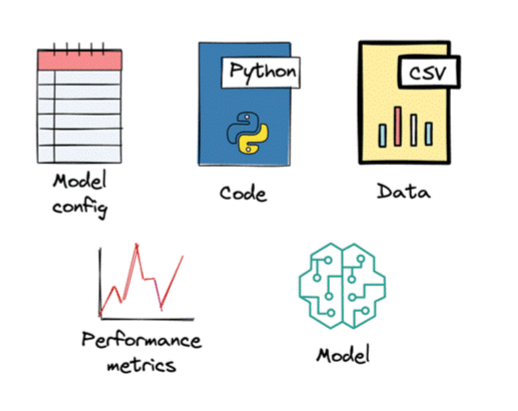
In real-world deployments, a lot of “glue” is needed around the model to make a complete system, including data pipelines, feature engineering, model serving infrastructure, user interfaces, monitoring, and more.
Only a tiny fraction of an “ML system” is the ML code; the vast surrounding infrastructure (for data, configuration, automation, serving, monitoring, etc.) is much larger and more complex.
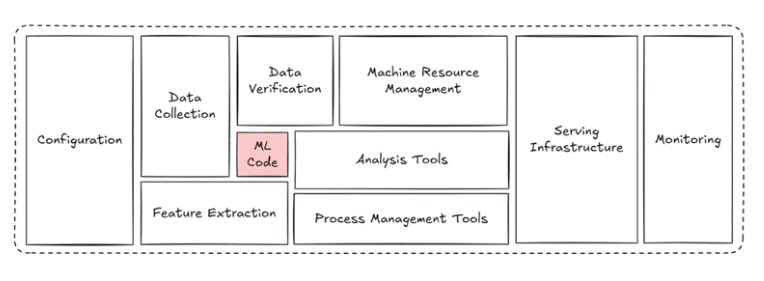
A conceptual ML system in production depicting the share of ML model codes in the complete project
MLOps seeks to manage this complexity by applying reliable software engineering and DevOps practices to ML systems, ensuring that all these components work in concert to deliver value.Building a highly accurate model in a notebook is just the beginning of the journey.Once deployed, ML models face changing real-world conditions: users may behave differently over time, data may drift, and model performance can decay.In other words, a model’s quality or usefulness does not remain static after deployment.The real world changes: users might behave differently over time, adversaries might try to game your model, or simply the initial model might not perform as well on new data as on the old data it was trained on.
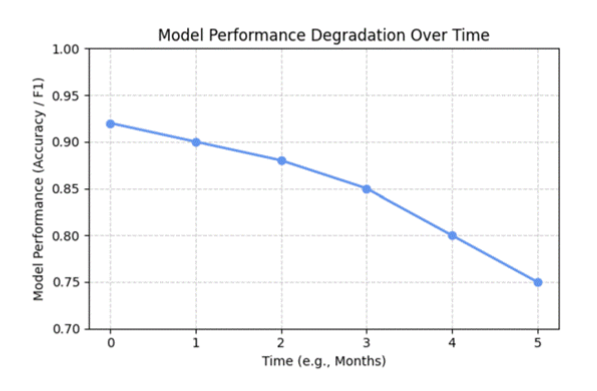
In the absence of proper operations, an accurate model can quickly become unreliable or even harmful when serving customers.In production, an ML system must run continuously, often 24/7, and handle evolving data and usage patterns, all while meeting requirements for latency, throughput, and quality.Inadequate MLOps can lead to stale or incorrect models lingering in production, causing bad predictions that hurt the business.For instance, a model making flawed financial decisions or inappropriate content recommendations.
Hence we need an end to end system which takes care of the below functionality.
Streamlining Machine Learning Workflows
This must automates data management and streamlines the process of creating and deploying ML models, reducing the time and resources required. It should allow for:
- Enhancing the ability to handle large amounts of data and complex problems.
- Recording information about each execution of the ML pipeline for data and artifact lineage, reproducibility, and comparisons.
- Collecting, organizing, and tracking model training information across multiple runs with different configurations using experiment tracking. It also enables purposeful tracking of all code and changes and facilitates sharing of code and model metrics with your team for maximum visibility and collaboration
- Standardizing the machine learning workflow with a consistent approach and reducing the risk of errors.
- Integrating with DevOps practices and tools for a seamless and streamlined experience in developing and operating ML models.Providing an environment that allows for easily repeatable experiments and the ability to iterate on them, resulting in improved models.
Scaling Machine Learning Models: This system must facilitate interoperability across multiple platforms and devices, enabling organizations to deploy ML models on a larger scale and increasing their reach and impact. This allows for:
- Data reuse across multiple solutions through reusable and composable components of machine learning pipelines.
- Improved accuracy and reliability of the models.
- Increased speed and efficiency of the development process.
- The use of feature stores for standardization of features for use across models in training and production.
Monitoring the Machine Learning System: This must enable end-to-end monitoring to help organizations ensure the performance of their ML models and identify potential issues before they become major problems. This allows for:
- Continuous training, deployment, and monitoring of the models.
- An integrated team to maintain the entire system from end to end, including logging strategies and continuous evaluation metrics.
- Better management of the lifecycle of the models.
- Performance tracking for monitoring models over time and making improvements as needed.
Summarising the MLOPS , Below is the depictions
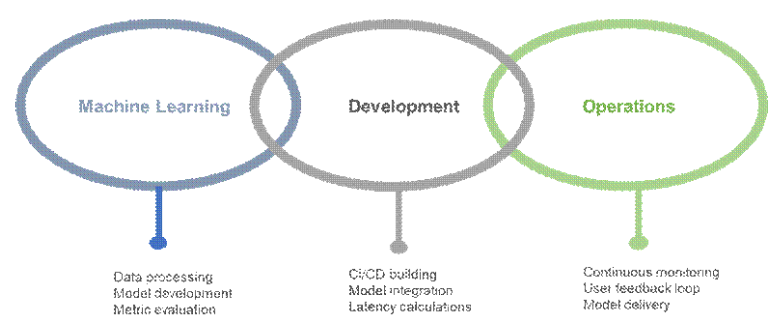
Getting Dipper of techniques of MLOPS
Without proper MLOps, teams often end up with manual, brittle processes for model deployment. Data scientists might manually prepare data and hand off models to engineers for one-off production integration, resulting in slow iteration and error-prone deployments.
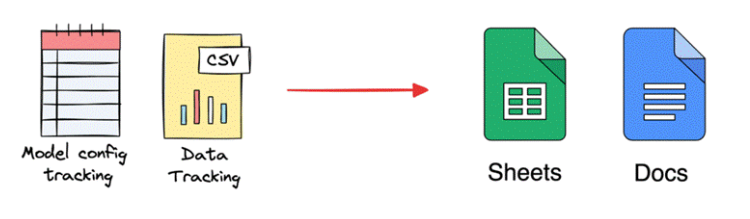
Manual tracking systems Sheets, Docs, etc. which get difficult to manage quickly
Before the advent of mature MLOps, building and updating ML systems was slow and laborious, requiring significant resources and cross-team coordination for each new model. This led to problems like:
- Slow time to market: Weeks or months to deploy a new model, due to ad-hoc processes and lengthy hand-offs.
- Fragile pipelines: Manual steps that easily break.
- Scaling issues: Hard to handle growing data or model complexity without automation.
Effective MLOps addresses these risks by establishing processes to continuously monitor, evaluate, and improve models after deployment.Overall, MLOps can be thought of as “DevOps for ML,” but more nuanced.
It is a set of practices, tools, and team processes that aim to build, deploy, and maintain machine learning models in production reliably and efficiently.This includes collaboration between data scientists and engineers, automation of ML pipelines, and applying software best practices to ML, like testing, version control, continuous integration, etc.
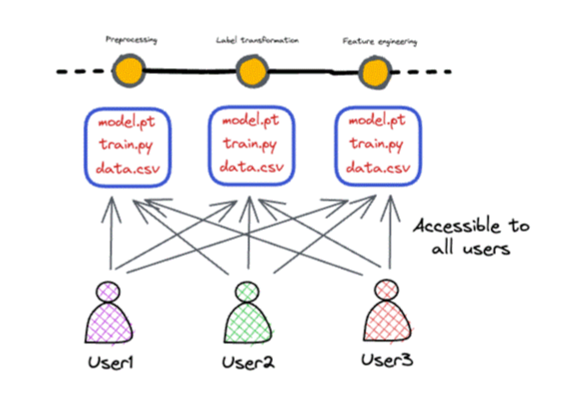
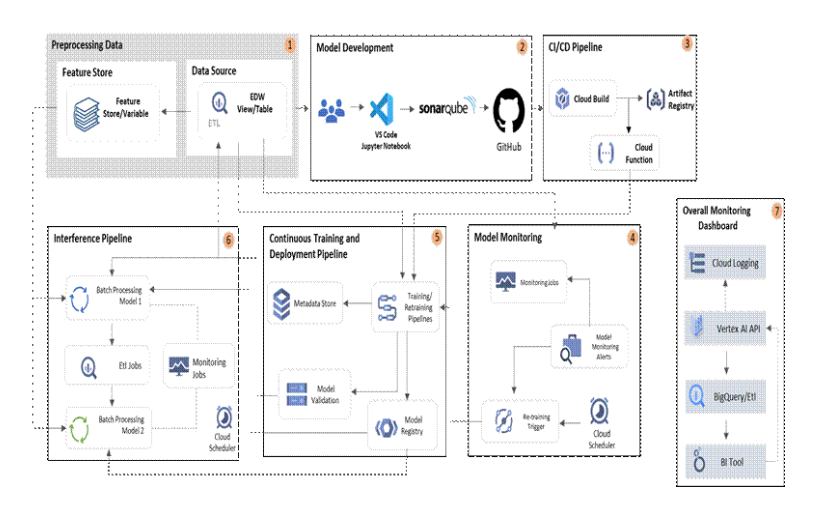
By putting the right infrastructure and workflow in place, MLOps enables us to iterate quickly on models while keeping them running stably in a live environment.
Architecture of 7 elements for MLOPS
MLOps vs. DevOps and traditional software systems
Building and deploying ML systems is in many ways an extension of traditional software engineering, but there are important differences to highlight.
Development operations (also called DevOps) refers to the best practices that software teams use to shorten development cycles, maintain quality through continuous integration/deployment (CI/CD), and reliably operate services.
MLOps borrows these principles but extends them to deal with the unique challenges of ML. Let’s compare how an ML production pipeline differs from a standard software project:
Experimental development vs. deterministic development
Writing traditional software is typically a deterministic process, but in ML development, the process is highly experimental and data-driven. You try multiple algorithms, features, and hyperparameters to find what works best.The code itself is not necessarily buggy, but the model might simply not be accurate enough to be deployed.Thus, there’s an added challenge of tracking experiments, handling stochastic results (due to random initialization, etc.), to ensure the reproducibility of results at later stages if needed.
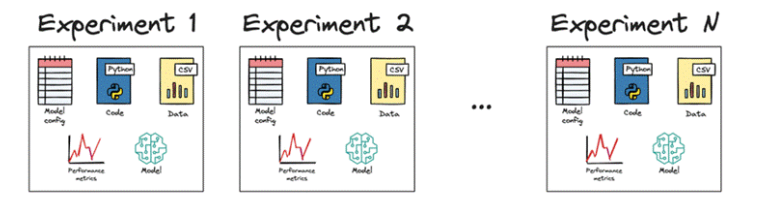
Experimental iterations in ML systems aren’t just limited to code
The iterative nature of model training means versioning data and models (not just code) becomes critical, something that traditional DevOps doesn’t cover by default.
Testing complexity
In standard software, you write unit tests and integration tests to verify functionality.ML systems require additional testing: not only do we need unit tests for our data preprocessing steps and any other code, but we also need to validate data quality and test the trained model’s performance. For example, we might want to test that the model’s accuracy on a hold-out dataset meets a certain threshold, or that there is no data leakage.
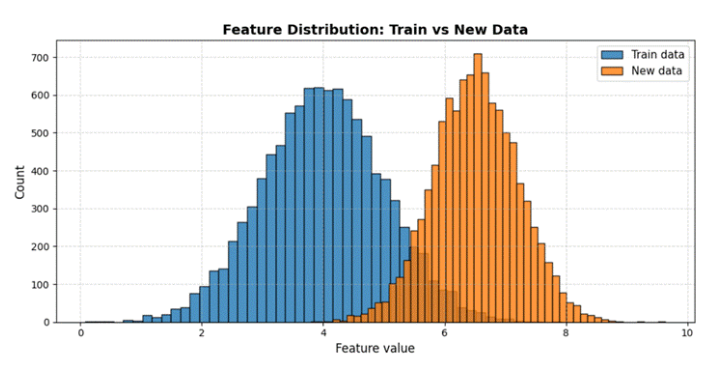
There’s also the concept of training/serving skew, wherein we must ensure the data fed into the model in production is consistent with what was used in training (feature distributions, etc.). This requires careful validation and monitoring in production.
Testing Layer in ML System
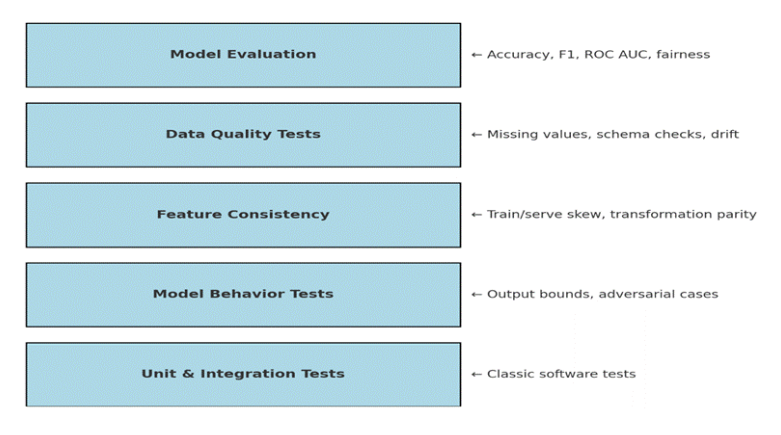
In short, an ML system’s “correctness” isn’t just about code logic, but also about statistical performance, which makes testing more involved.
We then turned our focus to discussing some terminologies and system-level concerns in production ML. There, we checked out some common concerns related to latency and throughput, data and concept drift, feedback loops, etc.
Deployment and updates
In traditional software CI/CD, deploying a new version of an application is a relatively straightforward push of code through staging to production.
In ML, a “new version” of the system often means retraining a model with new data or updated parameters, which itself is a multi-step pipeline.
Deployment isn’t just shipping a binary; it may involve a whole automated pipeline that periodically retrains and deploys models. For example, retrain a model nightly with the latest data and then serve it.
Automating this pipeline is a major focus of MLOps, which introduces ideas like continuous training (CT) in addition to CI/CD.
The machine learning system lifecycle
Different stages in the life of an ML system: Scoping → Data → Modeling → Deployment and Monitoring.
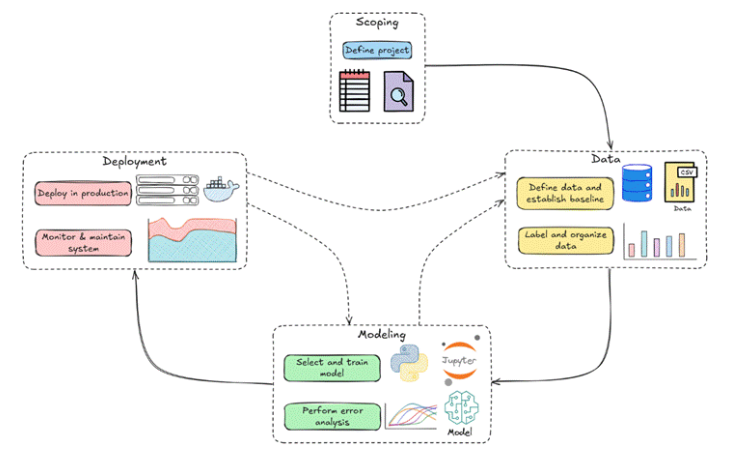
Let’s deepen our understanding by breaking down some of these components further, with a focus on the core technical elements of the ML pipeline:
Data pipelines
In ML, the quality and management of your data are often more important than the specific modeling algorithm. In a production ML system, you need a robust data pipeline to reliably feed data into model training and eventually into model inference (serving).
Key aspects of data pipelines include:
Data ingestion
Getting raw data from various sources into your system/development environment.
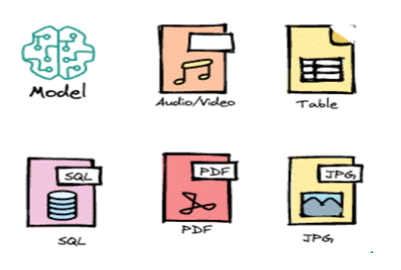
Ingestion can be done in batch (periodically importing a dump or running a daily job) or via streaming (real-time processing of incoming events).
Data storage
Once data is ingested, it needs to be stored (often in both raw form and processed form).Many production ML teams maintain a feature store, which acts as a centralized database of precomputed features that are used for model training and are also available for online inference.The feature store ensures consistency between offline training data and online serving data.
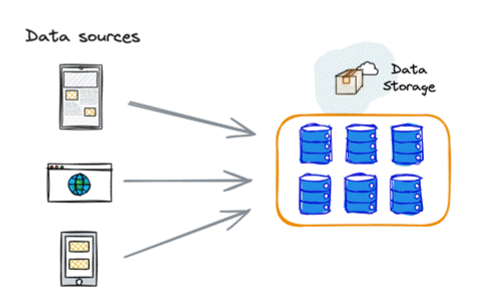
Common storage solutions include data lakes (e.g., cloud object storage like AWS S3, GCP Cloud Storage, or on-prem HDFS), relational databases, or specialized stores.
Data processing (ETL)
Raw data often needs heavy processing to become useful for modeling. This includes joining multiple data sources, cleaning, normalizing features, encoding categorical variables, creating new features, etc.
This is typically done in an ETL (Extract-Transform-Load) pipeline. Tools like Apache Spark, or even plain Python scripts with Pandas, can be used, depending on scale.
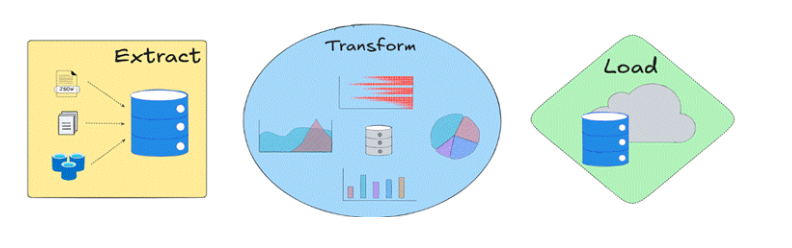
The output of this step is usually a curated dataset ready for model training
Data labeling and annotation
If the ML problem is supervised and requires labels (ground truth), you need a process to obtain labels for your data. In some cases, labels are naturally collected, in other cases, you might need human annotation.
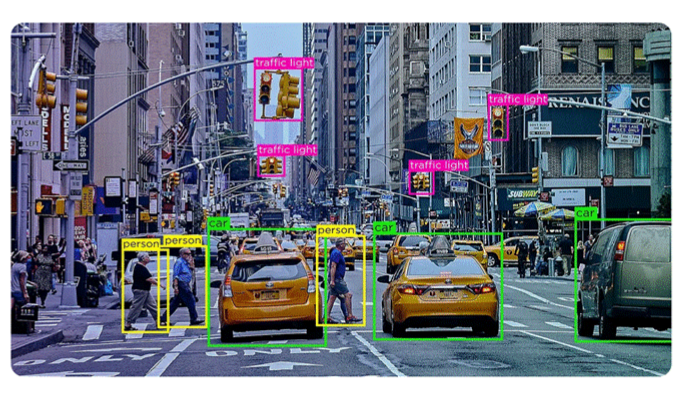
Production systems might include a labeling pipeline, using internal teams or crowd-sourcing to label new data on a continuous basis
Post ETL and ELT activities, We need to Sampling Strategies
Sampling strategies
Sampling is the practice of selecting a subset of data from a larger pool. In machine learning, sampling occurs in many stages of the workflow:
- Choosing what real-world data to collect for building your dataset.
- Selecting a subset of available data for labeling or training (especially when you have more data than you can feasibly use).
- Splitting data into training/validation/testing sets.
- Sampling data during training for each batch (in stochastic gradient descent, for example).
- Sampling in monitoring (e.g., logging only a fraction of predictions for analysis).
For most, the common exposure to sampling is likely the train/validation/test split. But it’s important to realize that how you sample can introduce biases and affect model performance.
Why does sampling matter?
In many cases, we cannot or do not use all available data. Perhaps data is too large (training on trillions of records isn’t feasible), or obtaining labels is costly, so we label a subset, or we intentionally down-sample for quicker experimentation. And it must be obvious that good sampling can make model development efficient and ensure the model generalizes, while poor sampling can mislead your results.For example, selecting an unrepresentative subset can cause your model to perform well on that particular subset but fail in production.
Types of sampling
Broadly, sampling methods fall into two families:
- Non-probability sampling: Not strictly based on random chance but uses some subjective or practical criteria to pick data.
- Probability sampling: Every data point in the population has some probability of being selected, typically striving for an unbiased sample.
Non-probability sampling methods
Under non-probabilistic methods for sampling, we have:
Convenience sampling
Selecting data that is easiest to obtain. For example, using the first 10,000 records from a log because they’re readily at hand, or using a dataset collected from one accessible source (like one city or one user group) because it’s convenient.
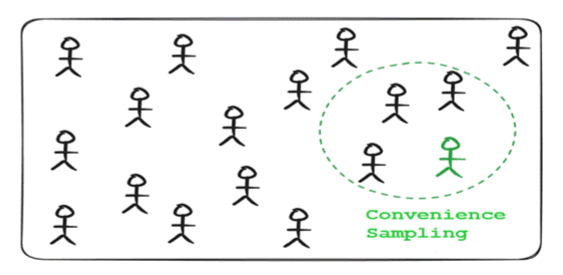
Implications of this method include a high risk of bias since the sample may not represent the overall population. This method is popular because, as the name says, it’s convenient, but it can skew results. For example, a model trained on data from a single city may not generalize to other regions.
Snowball sampling
Using existing sample data to recruit further data. This is often used in social networks or graphs. For example, you have data on some users, then you include their friends, then friends-of-friends, and so on.
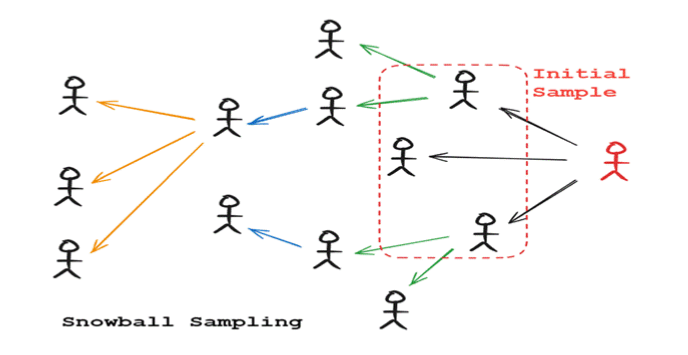
Probability (random) sampling methods
Probabilistic sampling methods are less prone to bias than non-probabilistic methods, owing to the inherent randomness in their selection strategy. The main techniques under this category include:
Simple random sampling
Each data point has an equal chance of being selected. This is the ideal basic approach, like shuffling your dataset and picking a subset. It works well if your data is homogeneous or you truly have no prior knowledge of important groupings.
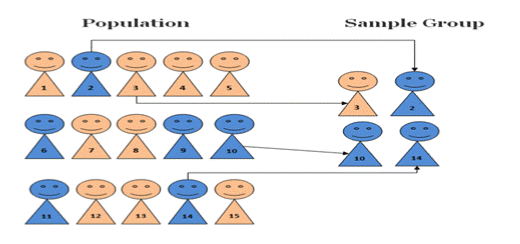
However, simple random sampling can be problematic if there are rare but important subgroups; you might, by chance, pick too few of them. Example: You have a dataset of transactions, and 2% are fraud. A simple random sample of 1,000 might contain around 20 fraud cases. If you happen to get 5 or 50 by random fluctuation, your sample’s fraud rate would skew. This disadvantage leads to methods like weighted sampling and stratified sampling.
Weighted sampling
A form of random sampling where each sample is given a weight (probability) for selection. This allows oversampling certain cases or undersampling others in a controlled way.For instance, you might weight rare classes higher so they appear more in the sample. Tools like random.choices in Python allow weighted sampling.
In ML training, weighted sampling might be used to combat class imbalance (oversampling minority class) or to emphasize recent data more than older data, etc. The concept of sample weights during model training is related but distinct: weighted sampling picks more of some data to include, whereas sample weights let you include all data but give some examples more importance in the loss function.Both aim to handle imbalance or importance, but weighted sampling physically changes the dataset composition.
Stratified sampling
Here, you divide the population into strata (groups) and sample from each group separately to ensure representation. For an imbalanced classification, you might stratify by class label so that your sample has the same class proportions as the full dataset (or ensure each class gets enough representation).
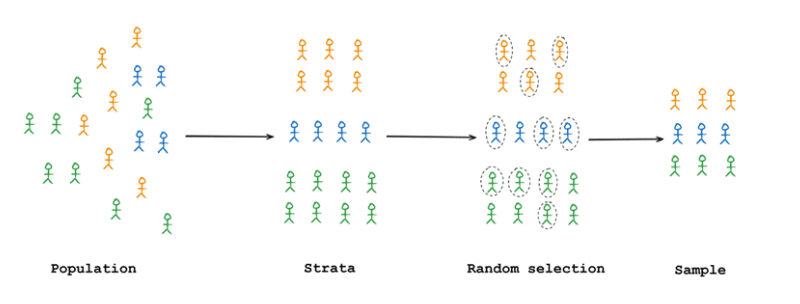
Stratified sampling greatly reduces variance between subgroup representation and is generally recommended for creating train/test splits when class distributions are important.The drawback is that you need to know the important grouping variables upfront, and if some groups are very small or hard to stratify (e.g., continuous variables), it might not be applicable.
Reservoir sampling
This is an algorithm for sampling from streaming data of unknown size, ensuring each item has an equal probability of being included.It is useful when you have a continuous stream (say, user clicks) and you want to maintain a random sample of fixed size (like the last 1,000 clicks, but in a random sense, not just the latest). A reservoir sampling strategy allows you to sample from a stream without storing it all, which is crucial in production streaming pipelines.
Importance sampling
A more advanced technique often used in statistical estimation and reinforcement learning. In importance sampling, you want to evaluate or train on a distribution that is different from where your data came from by re-weighting samples.In ML pipelines, importance sampling can be used to bias the sampling towards informative cases while still correcting for that bias during estimation.For example, in reinforcement learning, you might sample episodes from a behavior policy but want to evaluate a target policy. Importance sampling provides a way to correct for the difference.
Practical implications of sampling choices
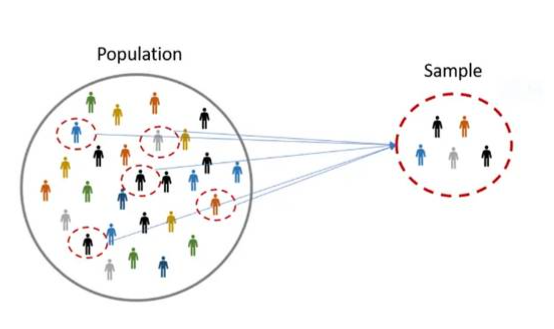
Given the critical role sampling plays in shaping the downstream stages of an ML system, it is essential to understand the key implications that arise directly from sampling choices.
Flow Process of Model
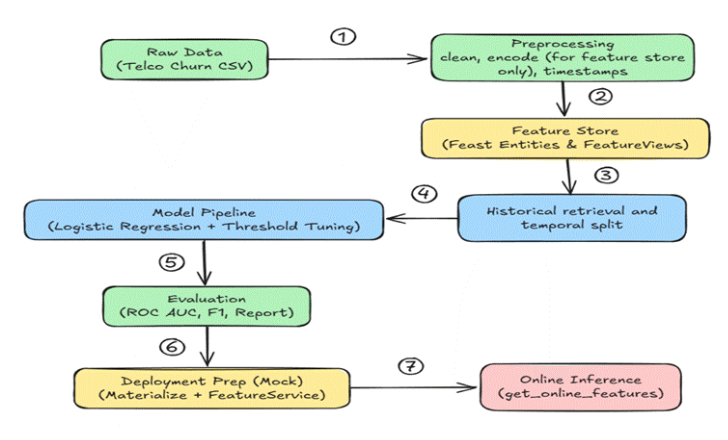
Data versioning and metadata
It’s critical to keep track of which data was used to train which model.
Data can change over time (new records appended, corrections applied, etc.), so simply saying “trained on dataset X” may not be enough; we need to know which version of dataset X was used to train a model for purposes like reproducibility, auditing, and model comparison. Many teams log metadata about their pipelines: timestamps of data extraction, checksums of files, number of records, etc.
In the ML system lifecycle, one important distinction to make is between offline data pipelines (for training) and online data pipelines (for serving features in real-time).
Why reproducibility matters
Reproducibility means that you can repeat an experiment or process and get the same results. In ML, this is critical for trust and collaboration.If someone else (or you in the future) cannot reproduce your model’s training, it’s hard to debug issues or improve upon it.
Reproducibility also ties closely with versioning, because to reproduce an experiment, you need to know exactly which code, data, and parameters were used. Let’s break down why this matters and how to achieve it in production ML systems
Debugging and error tracking
If a model’s performance suddenly drops or if there is a discrepancy between offline and online behavior, being able to reproduce the training process exactly as it was can help pinpoint the cause.
For instance, was it a code change? A new version of a library? A different random seed? Without reproducibility, you’re effectively chasing a moving target.
Collaboration
In a team, one engineer might want to rerun another’s experiment to verify results or build on it. If it’s not reproducible, it slows down progress.
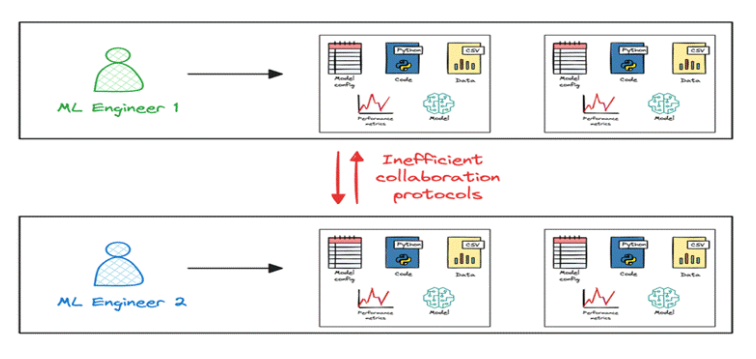
Reproducing someone’s work should be as easy as pulling their code and data and running a script, not a guessing game of “what environment did you use?”.
Regulations and compliance -MRM(Model Risk Management)
For example, a bank might need to show regulators the exact training procedure that led to a credit risk model and that running it again on the same data yields the same outcome. Personnel changes happen, maybe the original author of a model leaves the company. If the process is well-documented and reproducible, the next person can pick it up. If not, organizations risk losing the “knowledge” locked in that model.
Production issues
We often retrain models periodically. If a new model version performs worse than the last, reproducibility helps. You can compare the runs since you have all the ingredients versioned.
Also, if you ever need to roll back to a previous model, you should ideally retrain it (if data has changed) or at least have the exact artifact. Versioning allows you to do that.
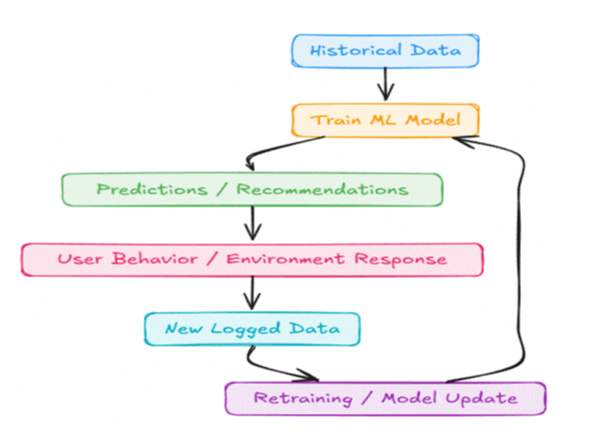
Challenges to reproducibility
Unlike pure software, ML’s outcome can depend on randomness (initial weights in neural nets, random train-test split, etc.). If not controlled, two runs with the same code/data could still yield slightly different models. Data is large, so you can’t just throw your dataset into Git easily (plus, data may update over time).
Environment matters the library versions, hardware (rarely, differences like floating-point precision on different GPUs can cause differences), OS, etc. If your training code relies on some system-specific behavior, that’s a reproducibility risk.ML models and pipelines have a lot of moving pieces, like model hyperparameters, feature pipelines, pre-processing steps, etc. It’s easy to have “experiments” that were not fully tracked. For example, you manually tweaked something in a notebook and forgot, leading to a one-off model that’s hard to replicate.
Best practices for reproducibility and versioning
Now that we have a solid understanding of the importance of reproducibility and the challenges it presents, let’s explore the best practices that help us fully leverage the benefits of reproducibility and versioning.
Ensure deterministic processes
If exact reproducibility is needed, set random seeds in your training code. Most ML libraries allow this (e.g., np.random.seed(0), random.seed(0), and for frameworks like TensorFlow/PyTorch, there are ways to fix seeds for their random ops). Note, however, that some parallel or GPU operations are inherently non-deterministic due to race conditions or reduced precision. If you need bit-for-bit identical results, you might have to sacrifice some performance (many frameworks have a “deterministic” mode that is a bit slower).
In practice, reproducibility within a tolerance is often enough, i.e., the model might not be bit-identical, but it should have a similar performance and similar outputs. Nevertheless, controlling sources of randomness (data shuffling order, weight initialization, etc.) is good practice.
Also, if using multiple threads, be aware that the order of execution could vary. Often, fixing seeds and using a single thread for critical parts can improve determinism. The rule of thumb: if someone runs your training pipeline twice on the same machine, it should yield effectively the same model (or metrics). If it doesn’t, document that (maybe because of nondeterminism) and at least ensure the metrics are the same.
Version control for code
This is non-negotiable. All code, from data preparation scripts to model training code, should be in Git (or another version control system, abbreviated as VCS). Every experiment should ideally tie to a Git commit or tag. That way, you know exactly which code produced which model. In practice, teams often include the Git commit hash in the model’s metadata. This allows tracing back from a model to the code.Code versioning is well-understood in software engineering; ML just needs to extend that rigor to other artifacts.
Version data
This one is trickier but crucial. At minimum, if you’re retraining a model, save a snapshot or reference to the exact data used. If the training data lives in a database and is constantly changing, you might need to snapshot it. If not managed, you might end up confused between different variants of the same data, not understanding which one was exactly used.
Test for reproducibility
It might sound meta, but have a process to verify reproducibility. For instance, after training and saving a model, you could do a quick test: load the model and run it on a known test input to see if the results are as expected.This ensures the model file isn’t corrupted and the environment can indeed produce the same outputs. Another idea is that if you retrain the model with the same data (perhaps with a different random seed or after some benign change), ensure metrics are in the same ballpark.
If they’re wildly different, something’s wrong. Either a bug or an unstable training process. For critical models, you might even have a “reproducibility test” where you attempt to re-run an old training job (on archive data) to see if you get the same result, as part of CI.This is not common (because it can be expensive), but it’s conceptually similar to regression tests in software. Track experiments and metadata .Use an experiment tracker (like MLflow) to log everything about an experiment and its runs.
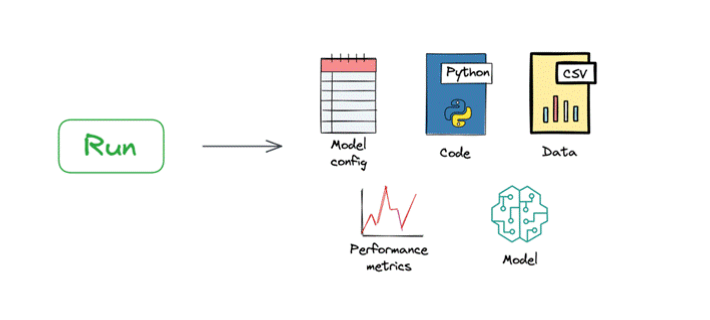
One of Tool ML Flow , Drag and Drop kind of Tool to use for experiment and Run.This typically means that when you execute a training script, it logs:
- A unique run ID
- Parameters used (hyperparameters, training epochs, etc.)
- Metrics (accuracy, loss over epochs, etc.)
- The code version (via Git hash, as above)
- Data version (maybe a DVC data hash or dataset ID)
- The model artifact or a reference to it
- Possibly the environment info (library versions)
Note that an experiment in MLflow is a named collection of runs, where each run represents a specific execution of a machine learning workflow or training process. And to elaborate further, a run is a single execution of a machine learning workflow within a specific experiment.It encapsulates all the details of that particular execution, including the code, parameters, metrics, and artifacts produced during the run.
Version model artifacts
Every time you train a model that could go to production, give it a version number or ID. Register it in a model registry. Tools like MLflow provide a central place to manage models with versions and stages (e.g., “v1–staging”, “v1–production”). model registry entry contains the model artifact and metadata like who created it, when, and often references to the experiment or code. For instance, MLflow’s Model Registry provides a UI and API to transition models through stages and keep a history.
It also stores lineage, i.e., which run (with which parameters and data) produced that model. By using such a registry, you ensure that even if you deploy model v5 today, you can still fetch model v3 if needed, and you know exactly what each version is.
Data and model lineage logging
When a model is trained, log references to the exact data. For example, if you use a data lake with partitions, note which partition or timestamp. If you query a database, include the query or a data checksum in the log.
Some advanced setups use data lineage tools (like tracking data provenance through pipelines). For most, even just recording “used file X of size Y bytes, with checksum Z” is great. It allows you to verify that you have the same file later. If using DVC, the DVC commit ID acts as the link.
Environment management
Use tools to capture the software environment:
- Use a requirements.txt or environment.yml (for Conda) to pin library versions needed for training and inference.
- Avoid “floating” dependencies (like just saying pandas without a version) because an update in a library could change behavior.
- Containerize if possible: a Docker image can serve as an exact snapshot of the environment. You could even version your Docker images (like my-train-env:v1).
- If not containers, use virtual environments to isolate dependencies. That way, running the pipeline a year later with the same requirements.txt can (hopefully) recreate the needed environment.
- Infrastructure as code: If your training involves spinning up certain cloud instances or using specific hardware, script that. This way, even infrastructure differences like accidentally using a GPU with different capabilities are less likely to creep in.
Trade-offs
It’s worth noting that absolute reproducibility (bit-for-bit) is sometimes unnecessarily strict. In many cases, we care that the performance or behavior is reproducible within a tolerance, not the exact weights.For example, if training a deep net gives 0.859 accuracy one time and 0.851 the next time, that’s effectively the same in terms of usefulness. Trying to get identical weights might be overkill. However, if you get 0.88 one time and 0.80 another time with supposedly the same setup, that indicates a problem (like maybe something changed that you didn’t control).
So aim for consistency, but don’t panic over a tiny difference caused by nondeterminism. From a business perspective, it’s the consistency of quality that matters. That said, if you can achieve bit-for-bit reproducibility easily, do it because it simplifies debugging, but be aware of the sources of nondeterminism as mentioned.
To summarize everything, in practice, achieving reproducibility requires discipline and culture as much as tools. You have to instill the habit of: “Did I commit that code? Did I tag the data version? Am I logging the runs?”Sometimes, fast experimentation tempts people to do things quickly without tracking, but that can lead to wasting more time later untangling what was done. A common adage is: “If it’s not logged or versioned, it didn’t happen.”
So teams often adopt checklists or automation to enforce this (e.g., the training script automatically logs to MLflow so you can’t forget).Overall, reproducibility and versioning are what make ML projects manageable and reliable in the long term. They turn ML from a one-off art into an engineering discipline.
By versioning everything (code, data, models, configs) and using tools to help track it, we create an audit trail for our models. This not only builds confidence (we can debug, we can improve, we can trust what’s running in production because we know where it came from) but also saves time.
Conclusion
MLOps (Machine Learning Operations) is a framework and practice that combines machine learning, DevOps, and data engineering principles to streamline the entire model lifecycle from development to deployment and monitoring. It ensures that data science projects move beyond experimentation to real-world production systems with reliability, scalability, and governance.
At its core, MLOps automates and standardizes the steps of the data science life cycle including data preparation, model training, validation, deployment, monitoring, and retraining. Traditional ML models often fail to sustain performance once deployed, due to changing data patterns or manual operational bottlenecks. MLOps addresses this by creating continuous integration (CI) and continuous delivery (CD) pipelines for ML models, often referred to as CI/CD/CT (Continuous Training). This allows organizations to continuously retrain and redeploy models as new data arrives, ensuring they remain accurate and relevant over time.
MLOps frameworks typically rely on tools like MLflow, Kubeflow, TensorFlow Extended (TFX), Azure ML, AWS SageMaker, and Vertex AI, integrated with version control (Git), containerization (Docker), orchestration (Kubernetes), and monitoring (Prometheus, Grafana). Key techniques include model versioning, data drift detection, feature store management, automated retraining, and governance tracking ensuring traceability, reproducibility, and auditability of every ML experiment and deployment.
In the data science life cycle, MLOps acts as the glue between data exploration and business value delivery. Data scientists can focus on model innovation while engineers manage automation, scaling, and reliability. It reduces time-to-market for AI solutions, improves model performance through continuous feedback